
Define a reason to reject the sample
Skip White Sand when its color character or depth conflicts with a fixed finish you plan to keep. The main issue to resolve here is a sandy neutral rather than white paint. White Sand is a beige color despite its name, so visible neutral warmth belongs in the expectation.
Oatmeal fabric and pale stone can form a low-contrast palette; a white trim sample helps establish how much definition remains.
The material conflict matters more than popularity
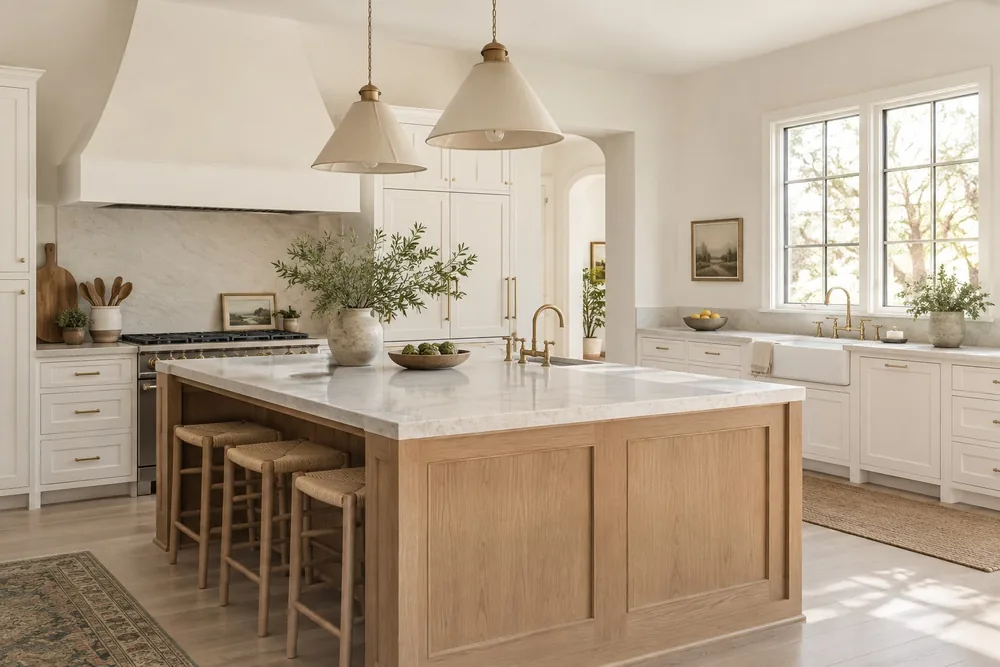
For a palette involving pale stone and oatmeal fabric, place the paint against the permanent material that is hardest to change. If that join looks wrong in the lighting used most often, do not let a flattering isolated chip overrule it. A scheme can be attractive in another house and unsuitable for the particular countertop, floor or cabinet finish already installed here.
White Sand has an LRV of 66.95; Benjamin Moore Natural Cream OC-14 is 64.78. The difference is 2.17 points, with White Sand returning more light under the reference measurement.
The condition for keeping White Sand
Compare it against a white trim sample so the amount of beige is an intentional part of the scheme. The undertones and neighboring colors covers that related choice. The physical-sample checklist covers that related choice.
If making White Sand work requires replacing materials you intended to keep, revise the paint shortlist first. A successful sample should resolve the room brief, not expand the renovation without a clear reason. Before ordering samples, compare room-planning features in the paint color visualizer roundup.
Sources & notes
Color specifications: Benjamin Moore White Sand OC-10. The recorded LRV is 66.95. Named comparison values come from the respective manufacturers; material schemes are editorial suggestions.
This guide reviews published color information and proposes practical sample checks. It does not claim first-hand paint testing or customer-review scores. Benjamin Moore does not sponsor or endorse this site. Product names and trademarks belong to their respective owners. Confirm the color in a physical sample and select the coating for the actual surface and finish.